There’s something quietly monumental has been happening in the basement levels and climate-controlled vaults of the British Library. While tourists queue outside for a glimpse of the Magna Carta or a first-edition Shakespeare, teams of specialists are working through one of the most ambitious preservation projects in British history. They’re racing against time itself.
The British Library holds over 170 million items. Think about that for a moment. From medieval manuscripts to Victorian newspapers, from fragile maps to crumbling pamphlets, the collection spans centuries of human knowledge. And here’s the uncomfortable truth: paper doesn’t last forever. Newsprint yellows and becomes brittle. Bindings fail. Ink fades. The very act of reading these materials accelerates their decline.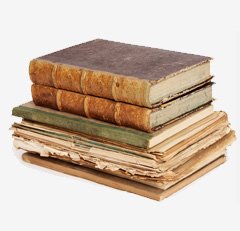
So the Library is converting books, documents and periodicals into digital formats at a scale that would have seemed impossible just two decades ago. It’s not just about preservation anymore. It’s about access, discovery and ensuring that future generations can engage with these materials long after the originals have turned to dust.
Why Digitisation Matters More Than Ever
Let’s be practical here. Physical access to rare materials has always been limited by geography, opening hours and the simple physics of how many people can safely handle a 400-year-old book in a given day. Digitisation removes those barriers entirely.
A researcher in Tokyo can now examine 19th century British newspapers at 3am without boarding a plane or booking an appointment months in advance. A student in Manchester can compare multiple editions of Dickens side by side. An archivist in Australia can trace the provenance of a colonial document. The democratisation of knowledge isn’t just a nice slogan. When institutions embrace book scanning and digitisation at scale, they fundamentally reshape who can participate in scholarship and cultural preservation.
But there’s another consideration that’s become increasingly urgent. Climate change poses very real threats to physical collections. Flooding, extreme temperatures and humidity fluctuations can destroy decades or even centuries of careful preservation work in a matter of hours. Digital copies serve as an insurance policy against catastrophic loss.
The Technical Challenge of Historical Documents
Not all digitisation is created equal though. Scanning your office receipts is one thing. Historical documents scanning requires a completely different approach and level of expertise.
Consider Victorian newspapers. The paper stock used in that era was often acidic and degrades rapidly when exposed to light or improper handling. Many newspapers from the late 1800s are so fragile they can barely be touched without risk of damage. Newspaper scanning demands specialised equipment that can capture images without applying pressure or heat that might accelerate deterioration.
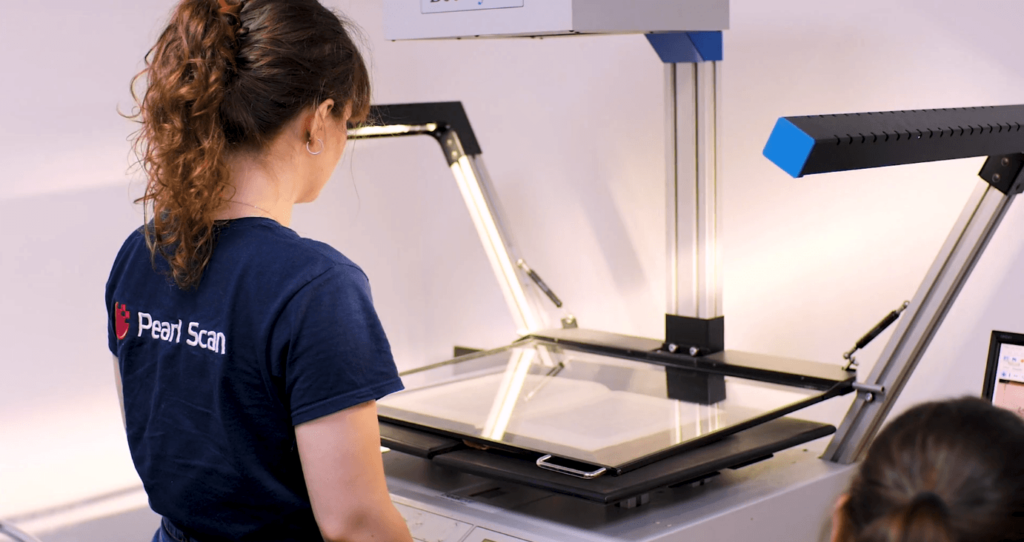
Or take bound volumes. You can’t feed a 300-year-old book through a standard document scanner. The spine might crack. Pages might tear. Instead, conservators use overhead scanners with carefully calibrated lighting and precise page-turning mechanisms. Some materials are so delicate they require fragile and old document scanning protocols that involve creating custom support structures just to hold them at the correct angle for capture.
The British Library’s approach involves a mix of in-house scanning facilities and partnerships with specialist digitisation companies. They’ve invested in planetary scanners, large-format scanners for maps and architectural drawings, and even robots that can automatically turn pages while monitoring for any signs of stress on the binding.
Resolution matters too. A standard office scan at 300 DPI might be fine for reading the text, but it won’t capture the texture of the paper, marginalia in pencil or subtle watermarks. The Library often scans at much higher resolutions, creating files that can be zoomed and analysed at microscopic levels. This matters enormously for scholars studying printing techniques, paper composition or authentication of documents.
Making Sense of Millions of Pages
Scanning is only half the battle. Once you’ve got millions of digital images, you need to make them searchable and usable. This is where Optical Character Recognition (OCR) becomes crucial.
OCR technology has improved dramatically over the past decade. Modern systems can handle gothic fonts, inconsistent printing and even handwriting with reasonable accuracy. But historical documents present unique challenges. Spelling wasn’t standardised until relatively recently. Letter forms have changed. Ink bleeds through thin paper. The British Library has had to develop custom OCR models trained specifically on historical texts to achieve acceptable accuracy rates.
The result is that you can now search across centuries of newspapers for a specific name, event or phrase. Want to track how coverage of the Industrial Revolution evolved? Or find every mention of a particular author in Victorian periodicals? It’s possible now in ways that would have required months of manual research just twenty years ago.
Magazines scanning presents its own interesting subset of challenges. Glossy paper from the mid-20th century often contains chemicals that interact badly with modern scanning equipment. Colour reproduction needs to be accurate enough to preserve the intent of the original designers. And staples, bindings and foldouts all require special handling.
The Human Element
For all the impressive technology involved, digitisation remains surprisingly human-intensive work. Each item needs to be assessed individually. Is it stable enough to scan? Does it need conservation work first? What resolution is appropriate? Should it be scanned in colour or will black and white suffice?
 Quality control is another critical step. Automated systems can flag obvious problems like blurred images or missing pages, but human reviewers still need to verify that scans are readable and complete. They check that page numbers align, that foldouts are captured properly and that nothing important has been cut off at the edges.
Then there’s metadata creation. Digital files are only useful if people can find them. Each item needs to be catalogued with accurate information about its date, author, subject matter and physical characteristics. This metadata is what makes the difference between a vast digital archive and a searchable, usable resource.
What Comes Next
The British Library’s digitisation programme isn’t finished. It probably never will be. The collection continues to grow, and priorities shift as new research needs emerge or previously overlooked materials gain importance.
There’s also the question of born-digital materials. We’re living through a transition period where much of human knowledge is being created digitally from the start. How do you preserve websites, social media posts, emails and digital artwork? The British Library is grappling with these questions alongside traditional digitisation work.
Artificial intelligence is starting to play a larger role too. Machine learning models can now analyse images to automatically detect damage, identify similar items across collections or even generate synthetic training data to improve OCR accuracy. Some researchers are experimenting with using AI to restore damaged or degraded documents, filling in missing text based on context and language patterns.
Lessons for Smaller Archives
The British Library’s work offers important lessons for smaller institutions and private collections facing similar preservation challenges. You don’t need a multi-million pound budget to begin digitising your materials, but you do need to think carefully about methodology and sustainability.
Professional scanning services have become increasingly sophisticated and affordable. Whether you’re dealing with bound volumes, loose documents or fragile materials, specialist companies now offer the same technologies and expertise that large institutions use. The digitisation of books has evolved from a boutique service into a mainstream option accessible to universities, law firms, local archives and even private collectors.
File format choices matter more than many people realise. TIFF files offer maximum quality and preservation value but take up enormous amounts of storage. PDF/A provides a good balance of quality, searchability and long-term stability. JPEG is fine for access copies but loses information with each save. Making these decisions thoughtfully at the start saves expensive reformatting work later.
Backup strategies are non-negotiable. Digital preservation requires redundancy. Multiple copies stored in different physical locations. Regular verification that files remain intact and readable. Migration plans for when storage media becomes obsolete. It’s less exciting than the scanning itself, but arguably more important.
The Bigger Picture
What the British Library is doing goes beyond preservation. It’s about creating new possibilities for how we engage with our cultural heritage. A 16-year-old in Wales can now browse through medieval manuscripts. A data scientist can analyse language patterns across two centuries of newspapers. An artist can draw inspiration from Victorian botanical illustrations.
These aren’t hypothetical scenarios. They’re happening right now, enabled by the unglamorous but essential work of converting physical materials into bits and bytes that can be searched, shared and studied in ways their creators never imagined.
There’s an irony in all this. We’re using cutting-edge technology to preserve the very things that technological progress has made obsolete. Physical books, newspapers and documents have been superseded by digital alternatives, yet we’re investing enormous resources to ensure they remain accessible. Perhaps that’s because we recognise that these objects are more than just information carriers. They’re artefacts that connect us directly to the past, complete with coffee stains, marginalia and the unmistakable smell of old paper.
Digitisation doesn’t replace the experience of handling a first edition or examining the typography of a broadside printed during the English Civil War. What it does is ensure that when those originals eventually succumb to entropy, something of them survives. And it opens up access to people who might never have the opportunity to visit London, let alone gain admission to a restricted reading room.
The British Library’s digital transformation is still a work in progress, but the direction is clear. Physical and digital will coexist, each serving different needs and audiences. The originals will remain, carefully preserved for scholars who need to examine them first-hand. The digital copies will travel the world, downloaded and viewed millions of times without any wear to the source materials.
It’s a model that other institutions are already following, adapted to their own collections and resources. What started as an experiment has become standard practice, driven by the recognition that in our digital age, preservation means more than just keeping physical objects safe in temperature-controlled vaults. It means ensuring they remain part of our living culture, accessible to anyone curious enough to look.