The General Data Protection Regulation (GDPR), now implemented in the UK as the UK GDPR alongside the Data Protection Act 2018, has fundamentally transformed how Human Resources departments manage employee information. Since its introduction, HR professionals across the United Kingdom have faced significant challenges in ensuring compliance whilst maintaining operational efficiency. With the Information Commissioner’s Office (ICO) releasing comprehensive new guidance on employment records in February 2025, understanding your obligations has never been more critical.
HR departments handle vast quantities of sensitive personal data daily, from recruitment records and employment contracts to health information and disciplinary proceedings. This guide examines the practical implications of data protection legislation for HR professionals and explores effective strategies for achieving and maintaining compliance.
Understanding HR’s Data Protection Responsibilities
According to guidance published by the UK Government, employers can retain specific categories of personal data about their employees without explicit permission, including names, addresses, dates of birth, National Insurance numbers, emergency contact details, and records of disciplinary action. However, certain sensitive data categories require additional safeguards and, in some cases, explicit consent.
The ICO’s latest guidance on keeping employment records emphasises that HR departments must establish a lawful basis for processing personal data. Crucially, the guidance advises that consent is often inappropriate in employment relationships due to the inherent power imbalance between employer and employee. Instead, HR professionals should typically rely upon contractual necessity, legal obligation, or legitimate interests as their lawful basis for processing.
Special category data, including information about health, ethnicity, religious beliefs, and trade union membership, requires additional protections. Employers must identify both a lawful basis under Article 6 and a separate condition under Article 9 of the UK GDPR to process such information lawfully.
Key Areas of Impact for HR Departments
Recruitment and Selection
The recruitment process generates substantial volumes of personal data. The ICO guidance stipulates that employers should not retain recruitment records for unsuccessful applicants beyond the statutory period in which a claim arising from the recruitment process may be brought. For most employment tribunal claims, this limitation period is three months, though many organisations retain records for six months to account for potential extensions.
Equality and diversity monitoring data collected during recruitment should be stored separately from application materials and must not be used for any other purpose. Where possible, this information should be anonymised.
Employee Record Management
HR departments typically maintain extensive employee files containing contracts, performance reviews, training records, absence documentation, and correspondence. The UK GDPR requires organisations to keep personal data accurate and up to date, and employees must be asked to regularly verify the information held about them.
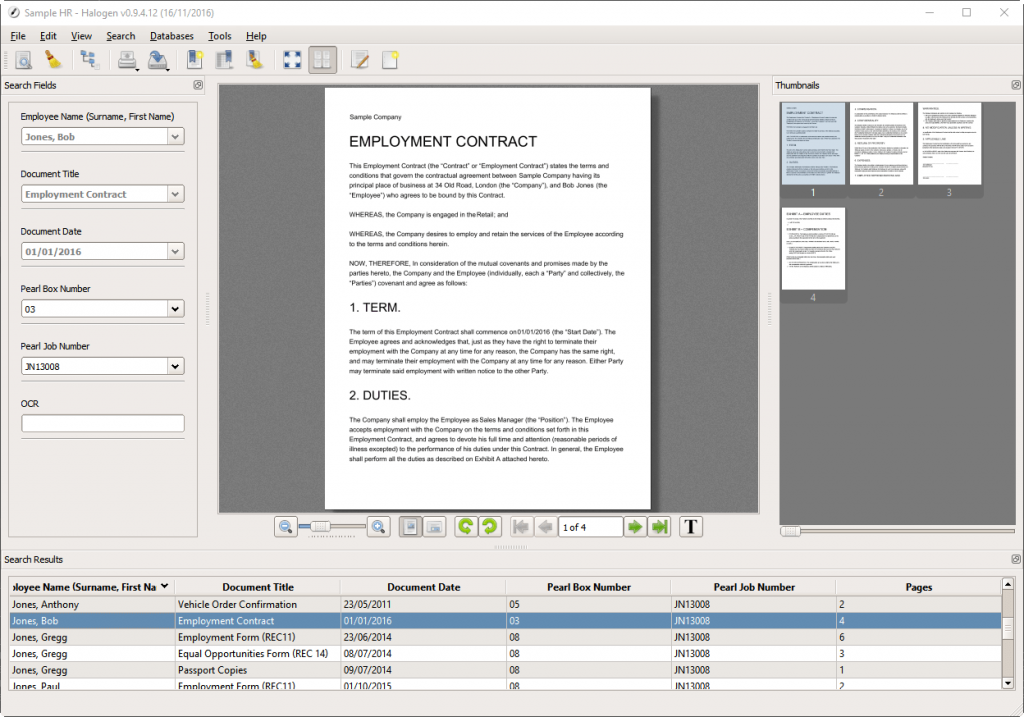
Managing paper-based personnel files presents significant compliance challenges. Physical documents are vulnerable to unauthorised access, difficult to track, and time-consuming to retrieve when responding to data subject requests. Many organisations are therefore transitioning to digital
HR document management systems to enhance security and accessibility whilst supporting GDPR compliance.
Data Retention Periods
The UK GDPR and Data Protection Act 2018 do not prescribe specific retention periods for employee data. However, various statutory requirements mandate minimum retention periods for particular record types. According to CIPD guidance, these include:
- Income tax and National Insurance records: at least three years from the end of the relevant financial year
- Statutory maternity pay records: three years after the end of the tax year in which the maternity period ends
- Working time records including overtime and annual holiday: two years from the date they were made
- General employment records: typically six years after employment ends to address potential claims
The ICO emphasises that a ‘one size fits all’ approach to retention will not suffice. Organisations must develop clear retention policies that reflect business needs and legal requirements, with periodic reviews to ensure data is not kept longer than necessary.
Subject Access Requests and Employee Rights
Under the UK GDPR, employees have the right to access personal data held about them. Subject Access Requests (SARs) have become increasingly common during workplace disputes, grievances, and disciplinary processes. The ICO confirms that employees retain their right to access personal data during these proceedings, and HR departments must be prepared to respond within one calendar month.
Employees also possess the right to rectification of inaccurate data, the right to erasure in certain circumstances, and the right to data portability. When an employee exercises their data portability right, employers may be required to transfer personal data to another organisation in an accessible, machine-readable format.
Responding efficiently to these requests requires robust document management systems. Organisations relying on paper-based filing systems often struggle to locate and compile the required information within statutory timeframes. Professional HR document scanning services can transform physical HR archives into searchable digital formats, enabling rapid retrieval and streamlined SAR responses.
The Consequences of Non-Compliance
The financial implications of GDPR breaches can be substantial. The ICO has the power to issue fines of up to £17.5 million or 4% of annual global turnover, whichever is higher. In October 2025, the ICO issued a £14 million fine to Capita for UK GDPR infringements following a cyber security breach that compromised the data of over six million individuals, demonstrating the regulator’s willingness to impose significant penalties for failures in data protection.
Beyond financial penalties, data protection failures can result in reputational damage, loss of employee trust, and operational disruption. The ICO’s enforcement approach increasingly focuses on proactive compliance measures, making it essential for HR departments to demonstrate accountability through documented policies, regular training, and robust security measures.
Practical Steps Towards HR GDPR Compliance
Achieving comprehensive GDPR compliance requires a systematic approach. The ICO recommends that organisations implement effective information management systems designed with data protection in mind. Key practical measures include:
- Conduct a data audit: Identify all personal data held within HR systems, including physical files, digital records, and data shared with third parties such as payroll providers and pension administrators.
- Develop clear retention policies: Establish and document retention periods for each category of HR data, ensuring alignment with legal requirements and business needs.
- Implement appropriate security measures: Apply password protection to sensitive electronic records, restrict access on a need-to-know basis, and conduct regular audits to detect unauthorised access.
- Provide staff training: Ensure HR personnel understand their data protection responsibilities and the importance of compliance.
- Review third-party arrangements: Ensure contracts with external processors include GDPR-compliant data protection clauses.
The Benefits of Digitising HR Records
Converting paper-based HR files to digital format offers numerous advantages for GDPR compliance. Digital records can be encrypted, password-protected, and access-controlled to prevent unauthorised viewing. Audit trails provide accountability by tracking who has accessed employee information and when.
Searchable digital archives dramatically reduce response times for Subject Access Requests. Rather than manually searching through filing cabinets, HR staff can locate relevant documents instantly using keyword searches. This efficiency not only ensures compliance with statutory timeframes but also reduces the administrative burden on HR teams.
HR file scanning services can index documents by employee name, date of birth, unique reference number, and document category, enabling efficient organisation and retrieval. Following digitisation, original paper documents can be securely shredded in accordance with BS 15713 standards, reducing physical storage costs whilst eliminating the risk of paper-based data breaches.
Looking Ahead: Staying Compliant
Data protection legislation continues to evolve. The Data (Use and Access) Act, which came into law in June 2025, introduces changes that may affect how employers handle personal data. HR professionals must remain vigilant, monitoring ICO guidance updates and adapting their practices accordingly.
By investing in robust data management systems, developing comprehensive policies, and embracing digital transformation, HR departments can navigate the complexities of GDPR whilst enhancing operational efficiency. The effort required to achieve compliance represents not merely a regulatory burden but an opportunity to modernise HR practices and demonstrate respect for employee privacy.
For organisations seeking to streamline their HR document management and ensure GDPR compliance, Pearl Scan offers comprehensive document scanning, digitisation, and secure destruction services. With ISO 27001, ISO 9001, and ISO 14001 accreditation, Pearl Scan provides the security and expertise required to handle sensitive employee data with confidence. Contact us today to discuss how we can support your HR department’s digital transformation journey.